.png)
A Complete Guide to Hiring Remote Workers
Find out everything you need to know about hiring remote workers, including the entire process of finding and attracting the right candidates for the job.

Why is remote hiring still a hot topic?
It’s no secret that COVID-19 caused remote work to skyrocket. According to Pew Research, 20% of U.S. employees who can do their tasks from home worked remotely before the pandemic. After the coronavirus outbreak, 71% of those workers said they worked remotely.
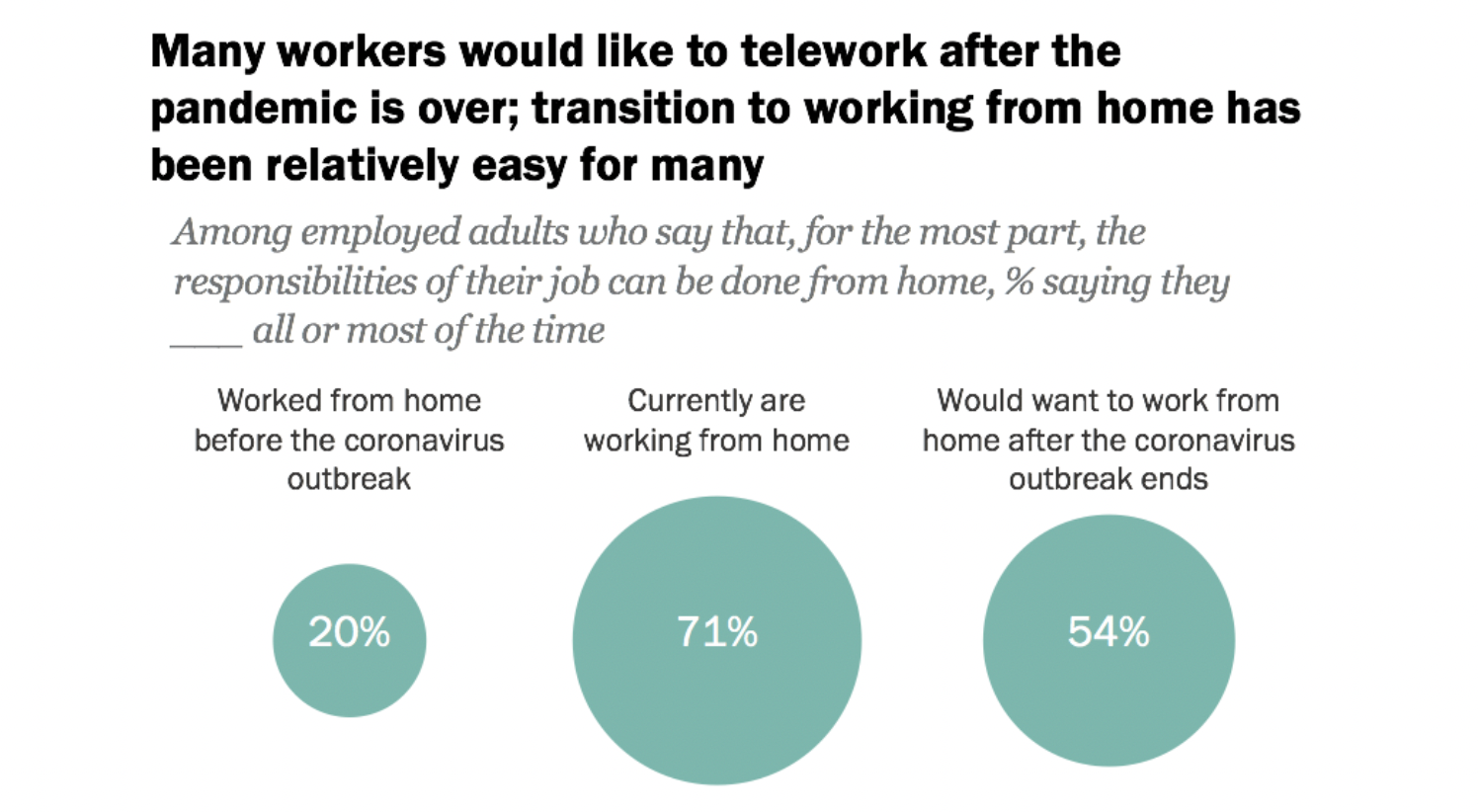
And it’s not limited to the U.S. In the U.K., 37% of the workforce (including those who cannot work from home) worked remotely in 2020, with that number rising to 48% in London.
But remote work was growing in popularity before the pandemic hit. Even looking back to the 1990s and 2000s, we saw an increase in remote work.
In 2010, the number of people working remotely at least one day a week increased 35% from 1997.
We now know there is no going back. The effects of the pandemic have taken root in our work culture, and they’re here to stay.
Today, many workers are demanding remote options across the board—it works well, and there’s no avoiding it. Here are some key stats to prove it:
- 60% of companies are already switching to a hybrid work model.
- Monthly quit rates could rise to 2.5% (see source above) for companies that try to force employees back into the office full-time.
- People working at remote companies report 43% higher productivity scores than those who don’t.
More predictions show that the future of remote work will continue to grow. McKinsey suggests that up to 25% of the workforce in advanced economies (such as the U.S. and U.K.) can work remotely without any productivity loss.
In the U.S., it’s expected that nearly half of professionals (around 48%) who are able to work remotely will be fully or partially remote in the next five years.
Simply put, remote work is here to stay.
The difference between allowing remote and supporting remote
The language surrounding remote work is pretty nuanced. If you’re looking to hire a remote employee, you need to be careful about the phrasing you use, as the wrong type of language can leave a bad impression.
So let’s differentiate between allowing remote and supporting remote. Although these phrases are often used interchangeably, they don’t mean the same thing.
For companies that want to hire remote workers, it’s not enough to simply say you “allow remote work.” That sounds like a reluctant compromise.
Allowing remote work doesn’t indicate the same principles as supporting a remote workforce. Sure, it shows a company is willing to let employees work from home. But it doesn’t necessarily offer the same level of help and guidance as supporting remote work.
Supporting remote work is what you should be aiming for.
It shows potential applicants that you’re 100% on board with remote or hybrid working. It also implies that you have a solid remote work infrastructure and that you’re happy to offer the flexibility and support that remote workers need.
The phrase suggests that the company has the right infrastructure and support system in place.
Before you dive in and hire remote employees, get your ducks in a row and prepare your business to support remote work. This will make the entire hiring process much more efficient, and you’ll be able to attract the best talent.
Remote hiring is beneficial for employers and employees
The good news is that there are quite a few perks of remote hiring that benefit both your business and your employees.
Let’s take a look at some of these benefits:
Of course, there are some downsides to be aware of, too.
For employees, working remotely can make it tricky to switch off at the end of the day. And if you’re not using the right communication tools, collaboration can be difficult (asynchronous communication can help with this, which we’ll talk more about shortly).
Knowing about these issues ahead of time allows you to put preventative measures in place, like setting up expectations and tools for team communication.
Being proactive and preparing yourself for the challenges you might face will put you in a better position when starting the remote hiring process.
How to foster a remote-friendly culture before you start hiring
Advertising remote jobs doesn’t necessarily mean that your company is set up for remote work or that your existing team members are on board with the idea.
To attract the best applicants, you need to show them that your workplace can support a remote workforce. The best place to start is to build a remote culture.
Here are a few ways you can start to foster a remote-friendly culture:
- Move to asynchronous communication. Get your team on board with remote communication by using an asynchronous communication tool, like Yac. With async communication, remote teams have the flexibility to communicate on their terms without needing an immediate response. You can save synchronous meetings for urgent and sensitive topics but use async communication to keep in touch about day-to-day tasks and host meetings. Find out more about using Yac for remote work.
- Enable deep work blocks. Deep work enables employees to focus on one task for an extended period without any distractions. It reduces context switching (rapidly switching between tasks and comms) and allows remote employees to work on important tasks without getting distracted by messages and calls from their colleagues.
- Be mindful of proximity bias. For a hybrid workplace, proximity bias is something to take into account. If you’re not familiar with the phrase, it involves offering preferential treatment to employees with a closer physical location (and it often occurs unintentionally). If you want a remote-friendly culture, your workplace must treat all hybrid employees equally. Period. If you offer preferential treatment to employees located closer, this sends a pretty clear message to the rest of the team.
There are various ways you can create a remote-friendly culture. Spend some time figuring out what works best for your business before you start the hiring process, and you’ll be in a much better position to hire remotely.
The remote hiring process: How does it work, and what do you need to know?
Hiring remote employees is new territory for some businesses. For others, it’s an existing process they’re looking to improve. To help you find the right talent, you need to know how to navigate the remote hiring process.
Fortunately, we’ve outlined some best practices you can follow when taking on the task.
Identifying your ideal candidate
First things first, you need to figure out who your ideal candidate would be.
But when you have such a wide pool of talent to choose from, how do you narrow it down?
The answer is simple:
Be clear about what you want from a candidate before starting the hiring process.
Here are a few questions you can start with:
- What specific work experience do they need?
- How do they schedule their work?
- How do they prefer to communicate?
- Do they have passions outside of work that could translate to the role?
These are just a few suggestions to get you started. Ultimately, it’s up to you to figure out exactly what you want from your candidate.
Justin Mitchell, Founder and CEO of Yac, also says it’s a good idea to look for candidates who have side hustles outside of work.
He says:
“In my experience, people learn quickly when they have side hustles. So I actively look for candidates with side projects. When our director of design told us she is also a part-time professor, we were ecstatic.
Some argue side projects distract people from business building. I see it differently. People aren’t distracted if they have passion for what they are doing. When that happens, having side projects quickly teaches you new lessons, gives you new experiences and stretches your brain into new territory. Plus, it’s a good way to validate a true entrepreneurial mindset. If you are the type of person that loves creating, you are the type of person I want on my team.”
Whatever you’re looking for, make sure you’re clear about what it is before you start looking. Trust us when we say it’ll make the entire hiring process much easier to manage—especially if this is your first time hiring remotely.
Finding the right candidate
The type of candidate you have in mind can have a big impact on how and where you conduct your search.
For example, you can use global job boards such as Indeed and Monster to find potential candidates. Both of these sites also provide filters to help you narrow down your search, making it easier to find candidates that meet your requirements.
We’re also seeing a rise in remote-oriented and alternative job sites, like Remotive and 4dayweek.io. These platforms collate jobs for specific needs, so jobseekers don’t have to filter the results on general job sites.

On attracting candidates, Phil McParlane, founder of 4dayweek.io, told us:
"According to a recent Harvard study, increased flexibility is now the second most sought-after job benefit (behind private health insurance). Offering staff the option to work remotely is a major component of this, with some employees almost expecting this benefit (e.g., software engineers).
And, if 2021 was the year of ‘remote work,’ 2022 may be the year of the ‘4-day work week’ with many companies moving to a shorter work-week in an attempt to reduce burnout, increase productivity, and attract talent."
Social platforms are also becoming a popular place for job seekers to connect with potential employers. Around 79% of job seekers use social media as part of their job hunt.
LinkedIn, Twitter, and Reddit are becoming increasingly popular sites for hiring. Studies show that 81% of job seekers want to see more job postings on Facebook.
But it’s important to note that cadence and tone are everything in these online communities and that each community has different expectations.
Let’s use Reddit as an example.
Conversation on Reddit is conversational and friendly, not professional. If you approach a potential candidate as you would on LinkedIn, you might not build the rapport you need to get them interested in the position.
We’ve hired people after interacting with them on Reddit, so we speak from experience.
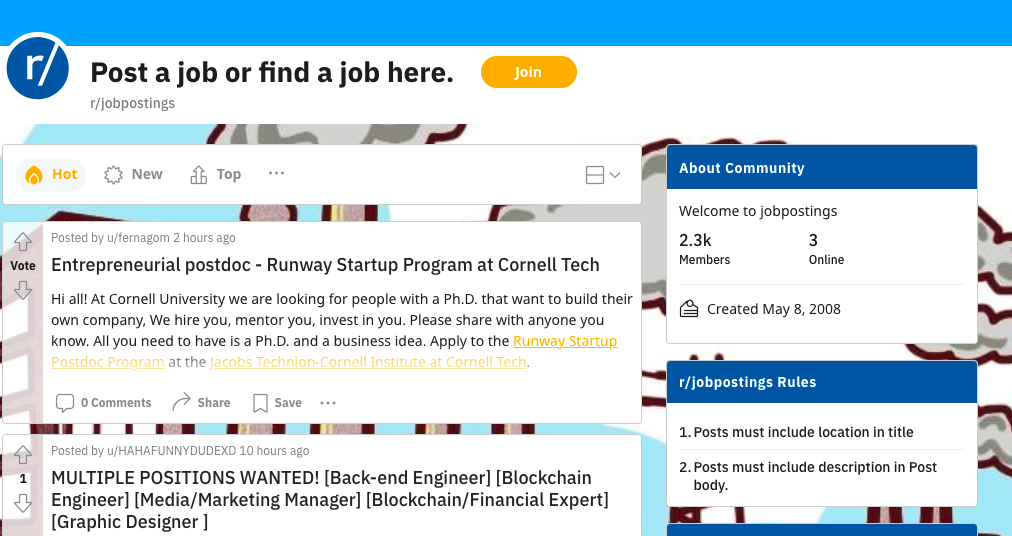
The aim is to establish this rapport early on with potential hires. It sets the baseline for how communication will be moving forward.
How candidates respond to your communication will tell you how interested they are in the position. If they aren’t responsive or communicating regularly, it’s probably not worth pursuing.
You also need to follow certain best practices on the platform when posting job ads.
For example, you should always post a budget, either an hourly wage, monthly salary, or a fixed fee. Be clear that it’s a remote position and specify if you prefer timezones in the job description.
These are just a couple of examples. If you opt to use Reddit (or any other platform) to recruit potential candidates, make sure you familiarize yourself with the do’s and don'ts. If you don’t follow the rules, potential candidates might not engage.
Attracting remote employees
In today’s day and age, candidates have to rely on your digital reputation to gauge whether they’d want to work with you. You need to think about how your company comes across online and whether it truly reflects who you are as a business.
Use your website, career pages, and social media channels to portray the following information:
- Outline the way you work and communicate remotely. You want to be clear about the way you work. This will show potential candidates what to expect if they decide to apply for the position. Be open about the team communication apps you use, the types of meetings you have, and how often you communicate. And if you’re using asynchronous communication, make sure to talk about this. Show potential employees how it works for your team, why you use it, and how it’ll benefit them.
- Employee testimonials. Show positive feedback from past and present employees to reassure candidates that your company is worth working for.
- Screenshots of collaboration in action. A screenshot of your company’s occasional social get-togethers (like paid-for away days) or how you run async meetings is a great way to bring your collaboration to life and show candidates how your team works together.
- Remote perks. Demonstrate how you support remote employees by mentioning any home office stipends, day care payback schemes, flexible schedules, or annual off-sites.
- Your values. 73% of workers wouldn't apply to a company that didn’t align with their values. So if you want to attract the right type of candidates, make sure your values are clearly stated on various platforms. These can include things like gender diversity and anti-micromanagement policies, for example.
By displaying all this information online, potential candidates can determine if they think they’re a match for the way you work and your company culture. It saves everyone time if they figure this out sooner rather than later.
Conducting the interview: Asynchronous, synchronous, or both?
When it comes to remote hiring, you might be wondering how best to conduct the interviews.
Should they be in person? Virtually? Asynchronous? Or all of the above?
There’s no one-size-fits-all approach. It’s up to you to roll out a process that you (and any other hiring managers) are comfortable with.
If you’re not sure what that looks like for your team, here’s what we suggest:
- Start things virtually with remote interviews. Get the ball rolling by conducting video interviews with a platform like Zoom. This will give you a wider scope of talent to interview, and it’ll save you the time and hassle of having to arrange an in-person interview. It’s easier for the interviewee, and it’s easier for you. If you already have some members of staff working remotely who need to be involved in the interview process, they can get involved without making a special trip into the office.
- Use asynchronous communication for follow-ups. Consider using asynchronous communication to invite candidates back for a second interview or have any follow-up interview questions. It’s more efficient because you can send messages at your best time. Plus, sending these comms via voice messaging adds a more informal touch than text-based emails. You can also gain insights on how the candidate will communicate with colleagues.
- Host an in-person interview (if possible). If you’ve narrowed down your candidates to a few of the top runners, you might consider having an in-person interview for the final stage. It’s not essential, but it is a good way to understand better what the person is like.
And when all that’s done, it’s time to make your decision and offer the role, which leads us nicely to our next step.
Offering the role
Congrats! You’ve found the perfect candidate. Now, how do you offer them the role?
This process varies from business to business, and it’ll also depend on the position you’re hiring for. But here are some best practices you can take into account when you’re offering the role to your top candidate:
Follow your official letter with a personal async video or voice message
Sending an offer letter shows that you’re following through with a legitimate process (something you can easily automate with resources like Rippling or Gusto). But following up with a personal Yac voice or video message? That shows you really want them to join your team.
Put yourself in the shoes of the candidate for a second. How would you feel getting a video message from a company saying they want to offer you the role? You’d be pretty flattered, right? Right. And that’s the point.
The follow-up message adds a personal touch that tells the candidate that you’re excited by the thought of them joining your team.
Start new hires on a contract basis
Depending on the position, it may be a good idea to start salaried hires on a contractual basis at whatever hourly rate they usually charge—even if it’s above your budget. This sets a precedent for how the working relationship will start before you commit to hiring them for the long haul. The employee gets a better rate, and you can easily let the new hire go if things don’t work out.
Just don’t fire too fast! If you’ve focused on company-fit first, you may be able to shift new hires around different roles to locate their strengths. It beats dismissing them immediately and restarting the hiring process, and it removes anxiety surrounding job security in your team.
Choose a start date
Make sure you confirm a suitable start date with the candidate and their direct manager. Human Resources can then start the onboarding process, and their direct manager can prepare for them to join the team.
It’s good practice to use a start date at the beginning of a new pay cycle. It’ll make payroll easier to manage, and the new hire will have a couple of days to settle in the new role.
Confirm the hybrid boundaries
If you’re hiring an employee to join your hybrid workforce, brief them on how it works. Tell them what their options are for the home-office split and confirm a plan of how they’d like to split their time.
Ask your new hires how, where, and when they work best. Feel free to share how other employees split their time to give them some inspiration.
You’ll also want to be transparent about the times teams get together synchronously, such as team brainstorms or strategy planning.
For more insight into managing hybrid work, take a look at this article: What is Hybrid Work, Really? Debunking the Myths.
What can you do to support employees working from home?
Before we wrap up, let’s take a look at some of the key areas where businesses can help hybrid employees succeed.
Provide physical working equipment
Just because your remote employees aren’t working in an office doesn’t mean they don’t need office equipment. Firms like Growrk and Firstbase can help you manage equipment setup from a distance.
Think carefully about what equipment they need to comfortably work from home. This includes ergonomic furniture, specific brands of computer, and anything else they need to complete their work (comfortably).
And be sure to familiarize yourself and your remote employees with the best way to sit at their desks while working from home. This will reduce the likelihood of repetitive strain injury and keep employees as comfortable as possible throughout the working day.
It’s also worth noting that some employees may need additional equipment to make them more comfortable—for example, a backrest to support their lower back while at their desk.
To find out if your employees need any additional equipment, talk to them. Ask them how their current equipment feels and if they need anything else to make them more comfortable. Being proactive about this also reinforces your remote-friendly culture.
Make their lives easier
No one wants to print, sign, and scan back forms. Many households don’t even have items like this in their home offices anymore. Help your employees complete their onboarding paperwork, as well as any policy documents or tax forms, by using digital services.
For example, global payroll solution Deel helps companies hire anyone, anywhere. (They’re experts at dealing with multinational teams across 150 countries.)
They ease new hires through the onboarding process with clear, automated steps, and (importantly) they help businesses stay compliant when hiring an international workforce.

From there, Deel can also run global payroll and integrate with other HR services, like expense tracking.
We spoke to Deel’s Co-founder and CEO, Alex Bouaziz, about remote hiring:
"There has been a giant mindset shift as companies have realized they don’t need to hire within a 20-mile square radius as long as you’ve got the right tools. Deel helps them tap into a global talent pool by letting them hire anyone in a new country with ease while automating the rest."
With today’s tools, hiring companies don’t need to worry about the headaches associated with hiring people further afield. Automating paperwork, as well as important regular tasks (like payroll), takes the burden off of startups who also want the best people on their teams.
Set communication expectations
Setting flexible communication expectations is a good practice in any remote workplace.
Why? Because it gives your employees flexibility and structure.
It tells them when they need to be available for communication and when they can focus on other tasks or switch off altogether. It also allows them to schedule their life around their desk, ensuring they get a good work-life balance in the mix.
Asynchronous communication is the best way to manage communication expectations and limit distractions.
With an async platform like Yac, remote teams can communicate flexibly. Teams don’t have to be available simultaneously to have a meeting, and they can respond to communication when they want. Plus, their calendars will be far lighter from the lack of synchronous meetings.

So, think about how an async platform will help your remote team to communicate better. Whether you’re hosting asynchronous meetings or sending feedback via voice messages, every employee has the flexibility they need to communicate when it suits them best.
Get your team communication up to scratch before you start hiring remotely
We’ve covered a lot of ground in this article.
We looked at why remote hiring is still so popular, the benefits of hiring remotely, and we outlined the entire remote hiring process.
How you communicate during the hiring process sets the baseline for all future communication. That’s why we love using sites like Twitter and Reddit when looking to fill positions. These platforms naturally cater to a more conversational interaction and you can easily gauge how passionate a potential hire is about their work.
But if you take anything away from this article, we hope it’s this:
You need to prepare your business for remote work before you start hiring.
Without the right tools and processes in place, it’ll be much harder to find, onboard, and hire a remote employee. So make sure you’re up to speed on everything internally before you start hiring remotely.
To get your business started on the right foot, take a look at Yac. Our async communication platform is a step in the right direction for teams that want to communicate and collaborate efficiently—no matter where they’re based. Get started for free today.
Backtrack is an AI-powered platform that automatically records every 1:1 meeting, generates accurate transcripts and CRM-ready notes, and delivers ROI reports sponsors can use as proof—so organizers can drive rebooks with data, not vibes—across trade shows, hosted buyer events, and other 1:1 meeting programs.